Araceae

Araceae
Gentianaceae
Plant family
- others -
Season Overview
Propagating
Planting
Harvest
J
F
M
A
M
J
J
A
S
O
N
D
1ST YEAR
FOLLOWING YEARS
Details


Light requirement
Semi-shaded

Water requirement
Moist

Soil
Medium (loamy)

Nutrient requirement
Medium

Light germinator

Germination temperature
10 – 15 °C (Degrees Celsius)

Plant distance
30 cm

Row spacing
30 cm

Seeding depth
0.2 cm
Instructions
Description
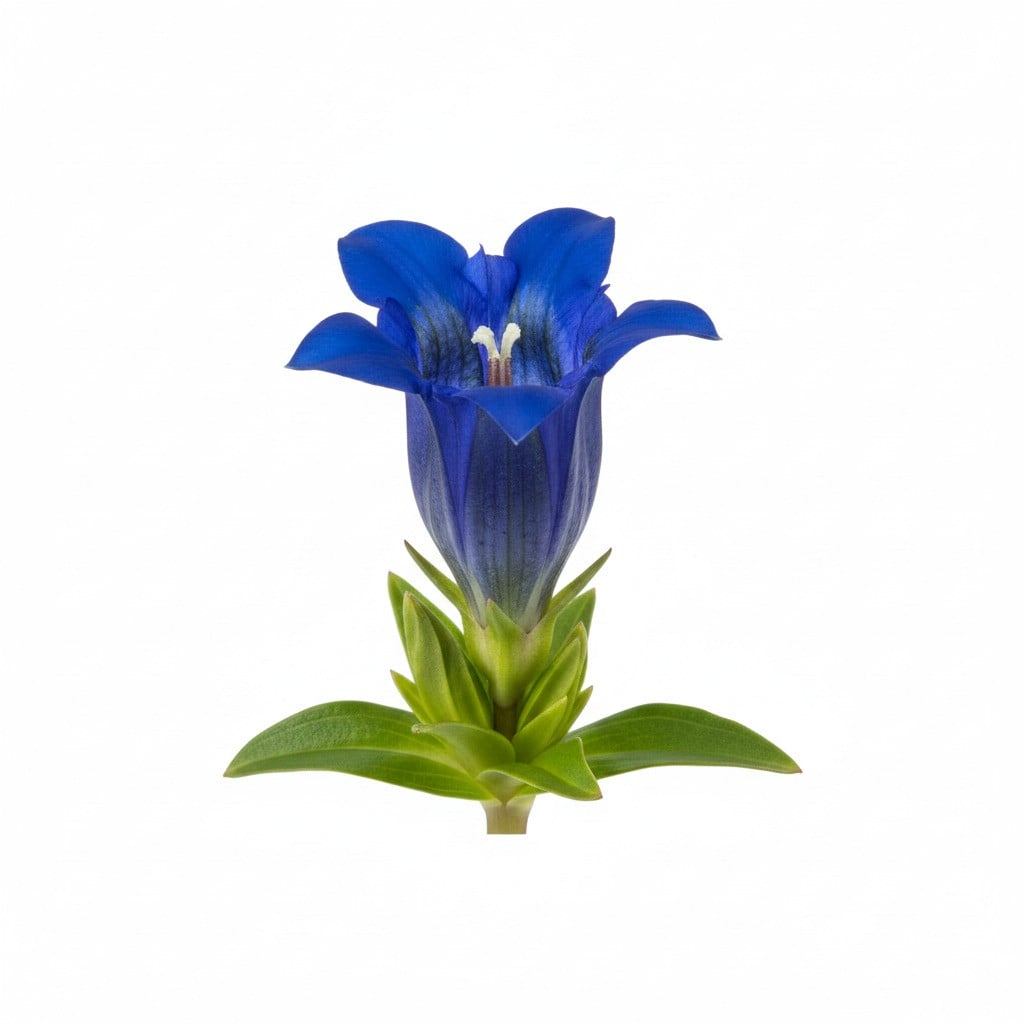
The gentian family (Gentianaceae), which belongs to the order Gentianales, consists of around 100 genera and approximately 1,700 species. Gentianaceae are best known for their brightly colored flowers, which can shine in the purest shades of blue as well as yellow, white, red and pink. Many species are cultivated as ornamental plants in gardens and parks because of their beauty. Among the best-known representatives are the various species of the gentian genus (Gentiana). In addition to their primary role as ornamental plants, some gentian plants have also found importance in traditional medicine, where they are valued for their bitter ingredients. Gentianaceae are widespread and can be found in temperate, tropical and subtropical zones of the world. This plant family is at home on all continents, with a particularly high diversity of species in Africa, Asia, Europe, New Zealand and South America. Their adaptability enables gentian plants to thrive in a wide variety of locations - from alpine meadows to damp forests and grasslands. Gentianaceae prefer nutrient-poor habitats such as moors or poor soils in mountainous regions. What do gentian plants look like? Within the Gentianaceae family there is an astonishing variety of growth forms, ranging from herbaceous plants to shrubs to lianas - the latter is rarely the case. However, most species are not woody and present themselves as annual or perennial herbs. The growth is upright and sometimes creeping. Leaves The leaves of gentian plants are typically opposite, sessile and surrounded by a smooth margin. The simple leaf structure serves to optimize photosynthesis and water storage. These abilities are particularly advantageous in the special habitats in which many gentian plants occur. The color palette of the leaves ranges from medium to dark green, with some species also having grey to silvery-green tones. Flowers The flowers of the Gentianaceae are characterized by their variety and the intensity of their colors, which cover a spectrum from deep purple, bright blue, bright yellow, pure white to occasional shades of red or pink. These flowers, which are either solitary at the end of the stems or in the axils of the plant, may be accompanied by bracts that partially enclose the base of the flowers. The flower structure follows a regular pattern with four to five - sometimes up to twelve - fused sepals and petals, which together form a symmetrical shape. The number of stamens usually corresponds to the number of petals. This ensures a regular, harmonious flower shape. Gentian plants are also popular in private gardens due to their beauty. Do Gentianaceae produce fruit? The fruits of Gentianaceae usually develop into two-lobed capsules containing numerous small, oily seeds. These seeds can be winged or unwinged, which facilitates their dispersal by wind or water. In addition to the typical capsules, some species produce berry-like fruits that contain fewer seeds in comparison. These seeds are usually dispersed by animals.
Origin:
High mountains (Alps, Pyrenees, Andes), Central Europe, tropical and subtropical areas, Asia, Africa, New Zealand, South America
Growing tips
To find the right location for the gentian, it is essential to consider the species in question and its requirements and natural habitats. A spot in light partial shade is suitable for all varieties of these mountain plants. In addition, the location for the gentian should have a stony, moist, loamy-humus soil with high permeability and water storage capacity. Other requirements vary so greatly from species to species that they must be considered separately. Unsuitable garden soils can be improved. For example, Plantura organic universal soil can be worked into the soil for a good structure and more organic substance. This organic soil with its long-lasting loose structure gives the subsoil the necessary permeability for the gentian, but can also store water. Spring and fall are good times to plant gentian. The exact time and planting distance must be adapted to the respective species, as the species grow to very different sizes. Gentian in a pot: If you want to plant gentian in a pot, you should first consider the requirements of the species. Depending on your soil preference, simply use a high-quality plant soil, such as Plantura Organic Universal Soil, or mix the substrate with lava rock flour. The pot should have a fairly large volume and a drainage hole. A drainage layer of pebbles or shards of clay must be placed at the bottom to prevent waterlogging. After planting, the pot should be placed in a semi-shady, cool and wind-protected spot. Particular attention is required when watering and in winter when keeping the plant in a pot. Suitable gentian species for keeping in pots are, for example Stemless gentian (Gentiana acaulis) Spring gentian (Gentiana verna) Autumn gentian (Gentiana sino-ornata) Summer gentian (Gentiana septemfida) Once the right location has been found for the gentian, the plant requires very little care. Gentian care is limited to occasional watering and annual fertilizer applications. The gentian likes fresh, moist soil and should be watered regularly depending on the weather. If the gentian is in a pot, it will need to be watered even more frequently as the small volume of soil cannot store as much water. When the soil has dried on the surface, it is time to water the gentian. If the gentian is growing in a pot, the nutrient content of the soil is usually sufficient for the coming season. Gentian planted in garden soil, on the other hand, should be given slow-release fertilizer once in spring and again in summer for vigorous species. The fertilizer not only enriches the plants, but also the soil life. It lasts for 3 months and provides the gentian with important nutrients during this time. Pruning can be carried out on taller growing species such as the yellow gentian or the swallowtail gentian, but is not absolutely necessary. Pruning is carried out in spring before the new shoots appear. Is gentian hardy? Gentians are hardy perennials, although some species tolerate lower temperatures than others. They should therefore be protected from deep frosts with a layer of mulch. The mulch layer not only retains the warmth, but also the moisture in the soil, which the gentian needs even in winter. Frost protection is particularly necessary if you want to overwinter gentian in a pot. Wrap the pot with fleece and place it on a block of wood to prevent the soil from freezing through. Propagation Gentian can be propagated by division and sowing. However, division is only suitable for perennial gentian species, such as: stemless gentian (Gentiana acaulis) Swallow-root gentian (Gentiana asclepiadea) Autumn gentian (Gentiana sino-ornata) To do this, the plant is dug up together with its roots in spring and carefully divided into 2 or more parts, each of which should have a few roots. In the case of mat-forming species such as Gentiana acaulis, individual, already rooted cuttings can also be separated by division. They are then immediately replanted separately in a suitable location. Sowing gentian is somewhat more difficult. Propagation by seed is best suited to gentian species with sensitive roots, such as: Yellow gentian (Gentiana lutea) Purple gentian (Gentiana purpurea) For this purpose, the ripe seed capsules are separated from the plant after flowering and the seeds extracted. They should be stored in a cool, dry place until sowing. In the fall, prepare seed trays with sowing soil, such as our Plantura Organic Herb & Sowing Soil, and spread the seeds on them. Our soil contains no peat and is only sparingly supplied with nutrients to encourage the young plants to develop roots. Cover the gentian seeds only lightly with soil and keep the seeds moist until germination. The cold weather in winter does not affect the mountain plant seeds, but actually promotes germination. After germination in spring, the young plants can be pricked out and planted in a suitable location. Effect of gentian as a medicinal plant The gentian root is generally used for the effects of gentian as a medicinal plant. It contains a lot of bitter substances that stimulate the appetite. Gentian is usually taken as a medicinal plant in the form of tea, mixed with other medicinal plants. In addition to gentian tea, there are also gentian drops that help with problems in the digestive tract. In traditional medicine, gentian roots are used to treat spleen and liver complaints, stomach pain and digestive problems. Gentian schnapps is also popular. Is gentian poisonous? Gentian is not poisonous and poses no danger to humans or animals. Due to its bitter taste, it is not eaten by most animals anyway.

Companion Plants

Antagonistic Plants

Diseases
Grey mold
Dry rot of crucifers
Septoria
Angular leaf spot of cucumber
Root Rot
Pests
Land snails
Aphids