Chaste tree

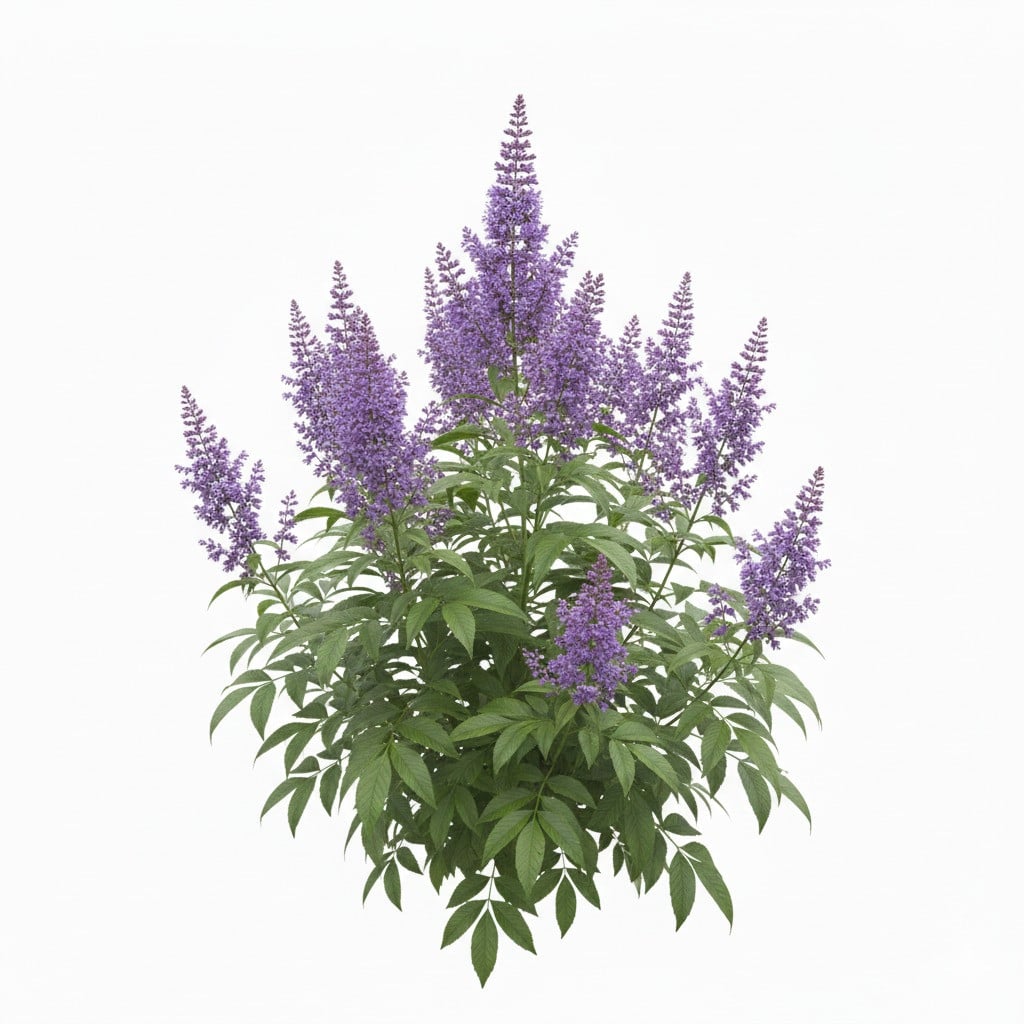
Chaste tree
Vitex agnus-castus
Plant family
Vervain family (Verbenaceae)
Season Overview
Propagating
Planting
Harvest
J
F
M
A
M
J
J
A
S
O
N
D
Details


Light requirement
Sunny

Water requirement
Moist

Soil
Light (sandy)

Nutrient requirement
High

Plant distance
300 cm

Row spacing
300 cm

Seeding depth
2 cm
Instructions
Description
Monk's pepper (Vitex agnus-castus) belongs to the verbena family (Verbenaceae). The medicinal plant, also known as the chaste tree, is naturally found in southern Europe, particularly in the Mediterranean region, and in western Asia. Monk's pepper is mainly found growing wild near rivers or not far from the coast. Monk's pepper has a long tradition as a medicinal plant. It is mentioned several times in written records from Greece (where it is an integral part of the native flora), Egypt and ancient Rome. In Homer's "Iliad", monk's pepper is mentioned as a symbol of chastity and a means of warding off evil. The German trivial name "Mönchspfeffer" (monk's pepper) derives from the shape of the fruit, which actually resembles pepper, and its use in medieval monasteries, where monks and nuns took it to make it easier to keep their vow of chastity. The perennial plant is often listed as a shrub, but is actually a semi-shrub and is often cultivated in our gardens. There, the monk's pepper is not only a bee pasture, but also a popular late bloomer, as it shows its flowers late in the summer, almost in autumn, and thus brings color to the garden once again.
Growing tips
Light germinator

Companion Plants
No companion plants

Antagonistic Plants
No antagonistic plants

Diseases
No diseases
Pests
No pests