Spicebush family

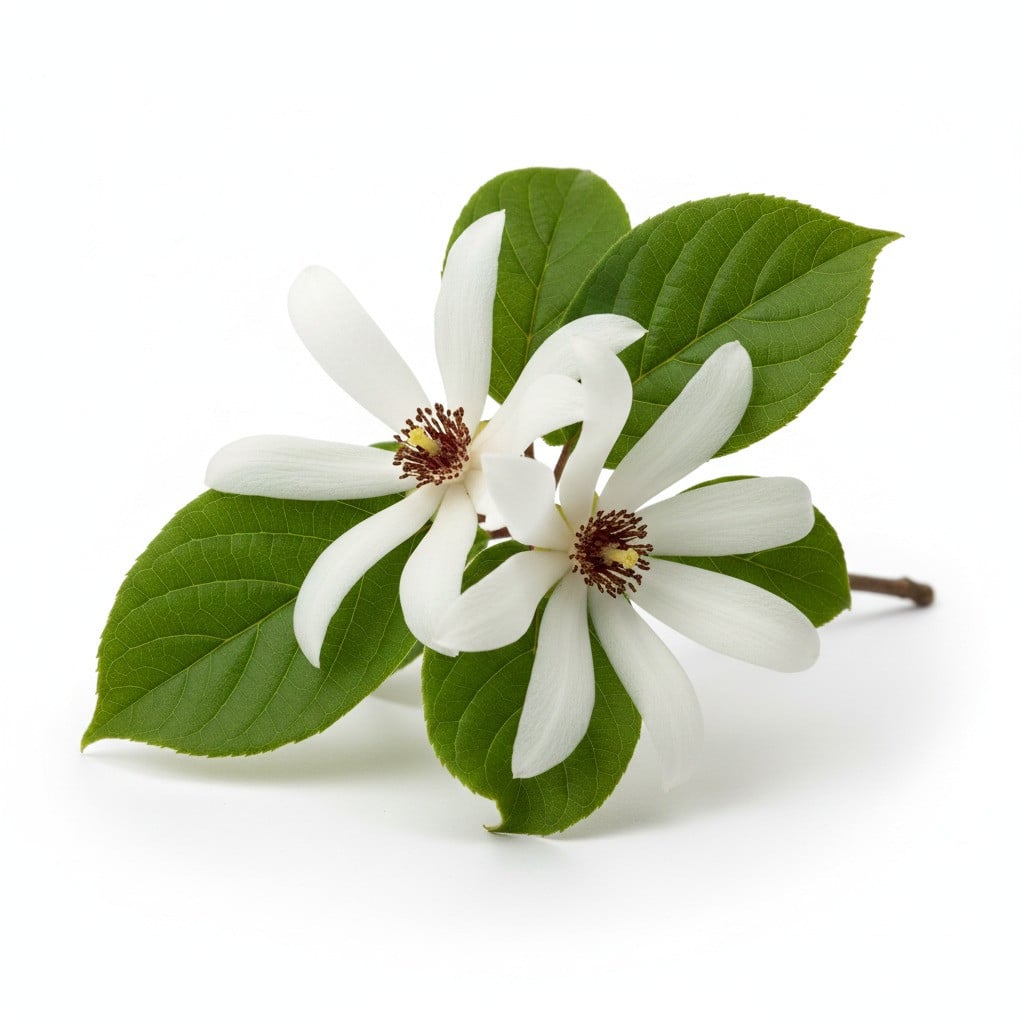
Spicebush family
Calycanthaceae
Plant family
- others -
Season Overview
Propagating
Planting
Harvest
Harvest
J
F
M
A
M
J
J
A
S
O
N
D
1ST YEAR
FOLLOWING YEARS
Details


Light requirement
Semi-shaded

Water requirement
Moist

Soil
Medium (loamy)

Nutrient requirement
High

Dark germinator

Germination temperature
20 – 22 °C (Degrees Celsius)

Plant distance
200 cm

Row spacing
200 cm

Seeding depth
0.5 cm
Instructions
Description
The small Calycanthaceae family comprises the two genera Calycanthus and Sinocalycanthus, although some authors also include three genera in the family. It is subdivided into the order of the laurel family (bot. Laurales). The authors also disagree about the species belonging to this family. Nine different species are certain. Among the known species are the Chinese winter flower (Chimonanthus praecox) and the true spice bush (Calycantus floridus). Leaf Calycanthaceae species have opposite leaves. They are stalked and their leaf blade is thick to leathery. Clear pinnate veins are recognizable on the leaf blade. The leaf surface is often covered with glandular dots. The leaves are simple with a smooth leaf margin. Only in some species, whose branches grow quickly, is the leaf margin slightly toothed. The short shoots are leafy. Stipules are missing. Flower The flowers appear individually in the axils of the leaves. Here they are at the ends of the short shoots. They are usually hermaphrodite and spiral-shaped. The perianths are not fused together and are often strikingly colored. Their number varies between 15 and 30. From the outside to the inside, the bracts change their appearance from sepals to petals. While the goblet-like bracts are still very narrowly developed, they become continuously larger towards the center. The spiral arrangement of the bracts is clearly recognizable. There is no division of the perianth into calyx and corolla. This characteristic still corresponds to very original flower characteristics. In contrast, the receptacle is highly specialized. This is hollow and depressed in the shape of a jug. The receptacle is also called the flower cup or hypanthium. The perianth leaves are located on the outside of the hypanthium and on the upper edge. They enclose numerous stamens. A flower contains between 15 and 55 stamens. The inner ten to 25 stamens are transformed into so-called staminoids. They are not fertile and only serve a display function. They take on a corolla-like shape and sit in the center between the fertile stamens. Both the fertile stamens and the sterile staminoids have developed a fleshy tip at the end. This serves as a food source for the beetles that mainly fertilize the species. The carpels sit at the base of the pitcher-shaped receptacle. They are upper and free-standing. There can be between five and 45 carpels, each with two ovules. The upper ovule later atrophies. The narrow pistils are free and end in a stigma. The elongated style protrudes from the narrowed opening of the axial cup. Fruit The cylindrical fruits are hairy and dark red to brown in color. They are usually aggregate fruits. In these species, the pulp is formed from the carpel and other parts, such as the calyx. This is why the fruits are called pseudo-fruits. The seeds are strongly derived and no longer correspond to the original shape. They contain a large embryo with spirally curled cotyledons. Such a shift in size in favor of the embryo is a typical characteristic of more highly developed angiosperms. The nutritive tissue that usually surrounds the seed is not pronounced in species of this family. Their seeds are poisonous. Numerous small nutlets form in the aggregated fruits. The flower axis dries out when the fruit ripens. It becomes leathery and partially woody. In some deciduous species, the fruits remain on the plant even in winter. Growth The spicebush family are woody plants. Most species are shrubs. They can also take the form of smaller trees. Among the Calycanthaceae there are both evergreen and deciduous species. Some deciduous species form rhizomes. The branches branch dichotomously, i.e. one main axis forms a branch with two secondary axes. There are oil cells on the branches. Utilization The rhizomes contain essential oils with an aromatic scent. Some species, such as the true spice bush (bot. Calycanthus floridus), produce flowers with a strong aromatic strawberry-like scent. Such plants are used as ornamental plants in parks and gardens. The spice bush is also used as a spice plant. The dried bark is a substitute for cinnamon. The wood is used to make baskets. The leaves are popular ingredients for the production of perfume, disinfectants and insect repellents. In China, the buds are used for medicinal purposes. The flowers form the basis of many dishes and lend a fresh fragrance to laundry.
Origin:
North America and East Asia, Northeast of Australia
Growing tips
- Choice of location: Semi-shady to sunny position. Protection from intense midday sun is ideal. Well-drained soil is important to avoid waterlogging. - Soil preparation: Soil should be rich in humus and slightly acidic to neutral (pH 6-7). Amend with compost and sand if the soil is too heavy or clayey. clayey. - Sowing and planting: Plant seeds about 0.5 to 1 cm deep and cover well, as they are dark germinators. they are dark germinators. A planting distance of 1.5 to 2 meters ensures sufficient space. - Watering: Keep evenly moist, but avoid waterlogging. Mulching can help to retain soil moisture. - Fertilization: Use a balanced, slow-release fertilizer (e.g. NPK 10-10-10 or 14-14-14). Supplement with well-rotted compost. Fertilize in spring when growth begins. - Care: Regular removal of weeds. Check for pests such as aphids and spider mites. Remove diseased plant parts if necessary. - Pest and disease management: Regularly check for symptoms of mildew or bacterial canker. mildew or bacterial canker. Natural pest control methods, such as the use of beneficial insects.

Companion Plants

Antagonistic Plants

Diseases
Root Rot
Powdery mildews
Pests
Spider mites
Aphids