Ananas MD-2

Variety
Ananas MD-2
created by Alexandro at 18.02.2026
Features
Growth habit
lifespan: perennial
growth habit: thornless
growth habit: half-high
growth habit: upright
growth habit: upright leaf position
leaves: rosulate
warm germination
growth habit: rosette-shaped
cross-pollination
seed-fixed: no
height: 50 - 60 cm
wide: 90 - 100 cm
height: 60 - 80 cm
growth habit: upright flower stems
entire leaves
tubular flower
propagation by offsets
propagation by runners
leaves slim
Blätter: länglich
Blätter: fleischig
Color
orange
green
yellow
grey-green
dark brown
dark pink
light brown
purple
black-red
red-purple
Flower: crimson
Blätter: dunkelgrün
Fruchtfleisch: gelb
Fruchtfleisch: weiß
Fruchtfleisch: creme
Taste
low-core
aromatic
fruity
seedless
Pineapple aroma
fleshy
intensive
slightly sour
sour
very juicy
Location
planting: greenhouse
fertilization: humus-enriched
planting: polytunnel / under protective covers
light: Full sun
soil moisture: well-drained
Soil moisture: dry to moderately moist
Planting: pots, tubs, or boxes
Planting: frost-free
Fruit shape
elongated
grooved
bottle-shaped
warty
very large
large
Form: langoval, zylindrisch
Fruit dressing: Berry dressing
Season Overview
Propagating
Planting
Harvest
J
F
M
A
M
J
J
A
S
O
N
D
1ST YEAR
FROM YEAR 3
Description
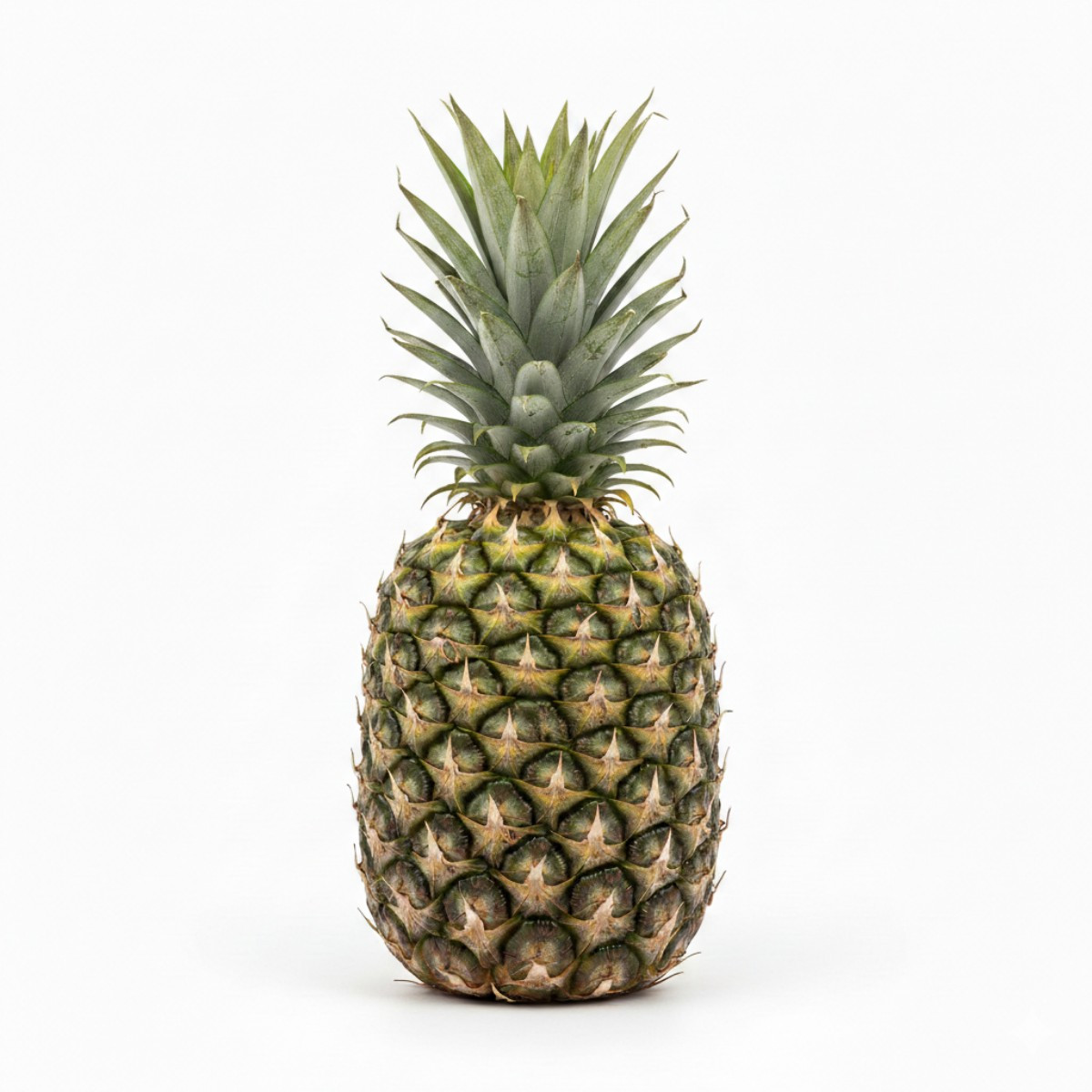
The MD2 pineapple, also known worldwide as "Super Sweet" or "Gold Pineapple," is the most economically important pineapple variety today. It was developed in Hawaii in the 1980s to replace the then-dominant but acidic "Smooth Cayenne" variety. It owes its triumph on the world market primarily to its extremely sweet taste and significantly lower acid content, which makes it particularly mild and digestible. Visually, the MD2 is characterized by a very uniform, cylindrical shape and an attractive golden-yellow color of the skin and flesh. The flesh is firm yet juicy and has a low fiber structure. A major advantage for trade is its high transportability and long shelf life; it is less susceptible to bruising and internal discoloration during refrigeration than older varieties. It also has a significantly higher vitamin C content. Today, the majority of MD2 fruit sold in Europe comes from plantations in Costa Rica, which can supply it all year round.
F1 Hybrid
Not frost resistant
Growing tips
Pull the plant from the stalk: The most common mistake is to simply twist off the leaf head and plant it. It usually rots that way. Clean cut: Cut off the crown with about 2 cm of pulp. Then remove all the soft flesh thoroughly until only the hard, whitish stalk is visible. Pluck the leaves: Pluck off the bottom 2-3 layers of leaves individually until about 2 cm of the stem is exposed. You will often see small brown nubs there - these are the roots. Leave to dry: Very important! Leave the stalk to air dry for 2 to 3 days to seal the cuts. This prevents rotting. The right substrate & container Pineapples hate "wet feet". Soil: Mix conventional potting soil with 50% sand or perlite. Even better is cactus soil or a mixture with orchid substrate (for aeration). Pot: Choose a pot with a large drainage hole. A piece of clay over the hole prevents the soil from clogging it. Watering correctly (the "heart" principle) Pineapples absorb water not only through the roots, but above all through the leaves. Watering technique: Pour the water directly into the center of the leaf rosette (the "heart"). It collects there and the plant feeds itself as required. Avoid waterlogging: The soil should only be slightly moist, never soaking wet. Water less in winter and spray daily in summer. Light is everything The MD2 needs a lot of light to build up sugar. Location: The brightest south-facing window you have. In summer, a place on the balcony or terrace (full sun!) is ideal. Winter: As there is often not enough daylight in the German winter, an inexpensive LED plant lamp is worthwhile so as not to stop growth completely.
Details


Germination temperature
25 – 30 °C (Degrees Celsius)

Plant distance
60 cm

Row spacing
80 cm

Seeding depth
2 cm

Companion Plants
No companion plants

Antagonistic Plants

Diseases
Septoria
Angular leaf spot of cucumber
Root Rot
Pests
Thrips
Spider mites
Schildläuse
White fly