blackthorn

blackthorn
Prunus spinosa
Plant family
Rose family (Rosaceae)
Cultivation Break
5 Years
Season Overview
Planting
Harvest
J
F
M
A
M
J
J
A
S
O
N
D
1ST YEAR
FOLLOWING YEARS
Details


Light requirement
Semi-shaded

Water requirement
Moist

Soil
Medium (loamy)

Nutrient requirement
Medium

Dark germinator

Germination temperature
5 - 12 °C (Degrees Celsius)

Plant distance
150 cm

Row spacing
150 cm

Seeding depth
2 cm
Instructions
Description
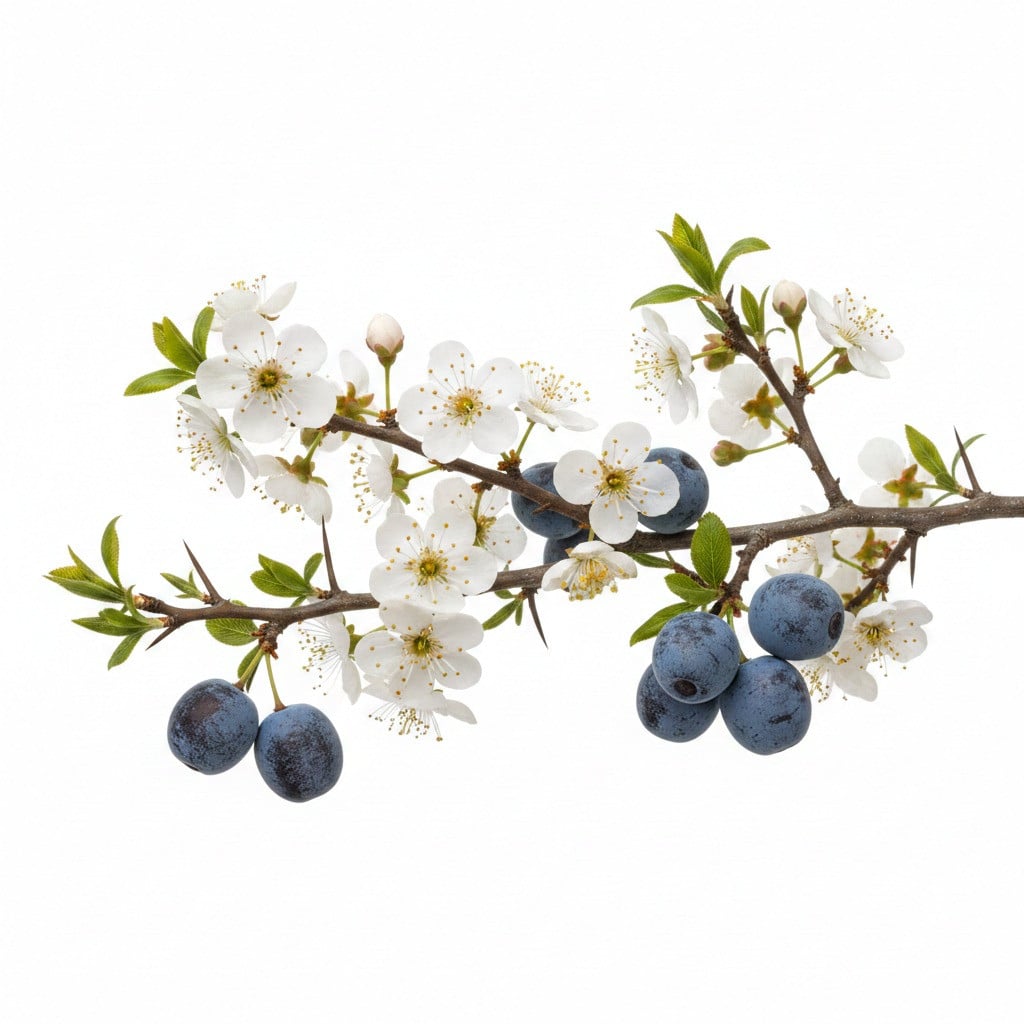
The sloe (Prunus spinosa), also known as blackthorn, is the wild ancestor of our domestic plums. It belongs to the rose family (Rosaceae) and is a separate species of blackthorn. These are thorny, very densely branched shrubs that form wide hedges over time. These plants usually grow to a height of two to three meters. The white flowers appear in March/April and then the fruits, the sloes, form. It is a great plant in the garden, as a windbreak hedge or as a habitat for birds and insects. More than 200 species of insects (including many wild bees and butterflies such as the female sail butterfly) use blackthorn as a food source or nursery. The fruits are important winter food for birds.
Origin:
Native to all of Europe, the Middle East and North Africa.
Growing tips
The seeds are cold germinators. They must be exposed to a period of frost outside (or in the refrigerator) throughout the winter in order to break down the germination inhibition. Germination then takes place the following spring.

Companion Plants
No companion plants

Antagonistic Plants
No antagonistic plants

Diseases
No diseases

Pests
No pests