Wisteria

Wisteria
Wisteria
Plant family
Legumes (Fabaceae)
Season Overview
Propagating
Planting
Harvest
Harvest
J
F
M
A
M
J
J
A
S
O
N
D
1ST YEAR
FOLLOWING YEARS
Details


Germination temperature
23 °C (Degrees Celsius)

Plant distance
125 cm

Row spacing
125 cm

Seeding depth
1 cm
Instructions
Description
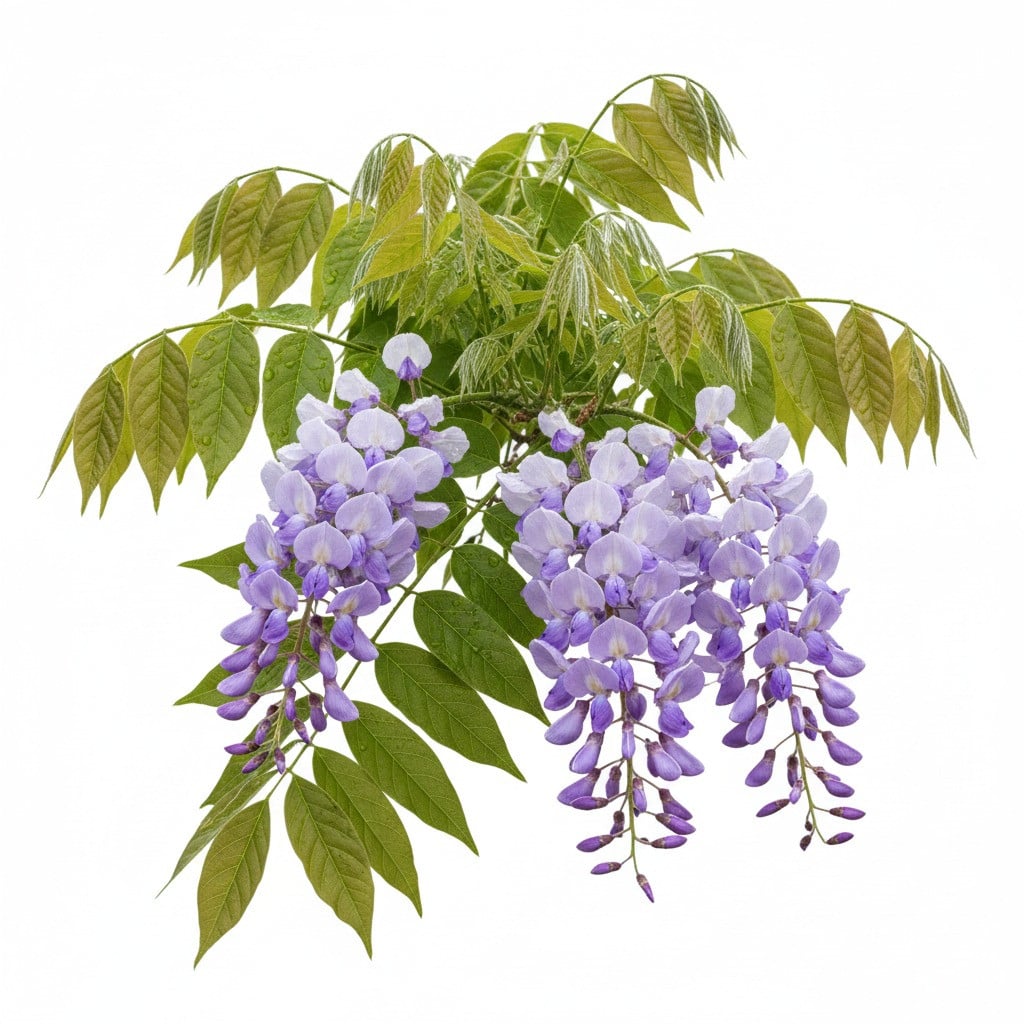
Wisteria is a genus of climbing plants in the subfamily Faboideae, within the family Fabaceae (the bean family). The species of Wisteria are native to East Asia and eastern North America. Wisteria is a deciduous, vigorous, woody climber that can reach a height of over 30 meters. The various wisteria species form showy, large, hanging clusters of flowers up to 50 cm long. In addition to varieties with the typical bluish-violet flowers, cultivars are also available in pink or white. Under good conditions, wisteria blooms twice a year. The first flowers appear in the spring, before the leaves. The second bloom in July-August is not as abundant. After flowering, wisteria develops hard pods with flat, lentil-like seeds that are explosively dispersed when ripe. All parts of the wisteria plant are poisonous.
Growing tips
The blue rain prefers a warm, sheltered, sunny and dry location with a sandy-humus, nutrient-rich, well-drained and rather acidic soil. Waterlogging and compacted soil should be avoided at all costs. The plant needs stable climbing supports. Wisteria is drought-tolerant, but requires a sufficient supply of water, especially during prolonged drought and when buds are forming. Blue rain requires regular pruning in late winter or early spring. In the summer after flowering, the side shoots should be cut back to a length of 30 to 50 centimetres. Fertilization should take place between flowering in spring and the second flowering in late summer. Mature compost or ready-made fertilizer with a low nitrogen content is good for this.

Companion Plants

Antagonistic Plants
No antagonistic plants

Diseases
Powdery mildews
Fusarium
Pests
Aphids
Spider mites
Voles