Standartsorte

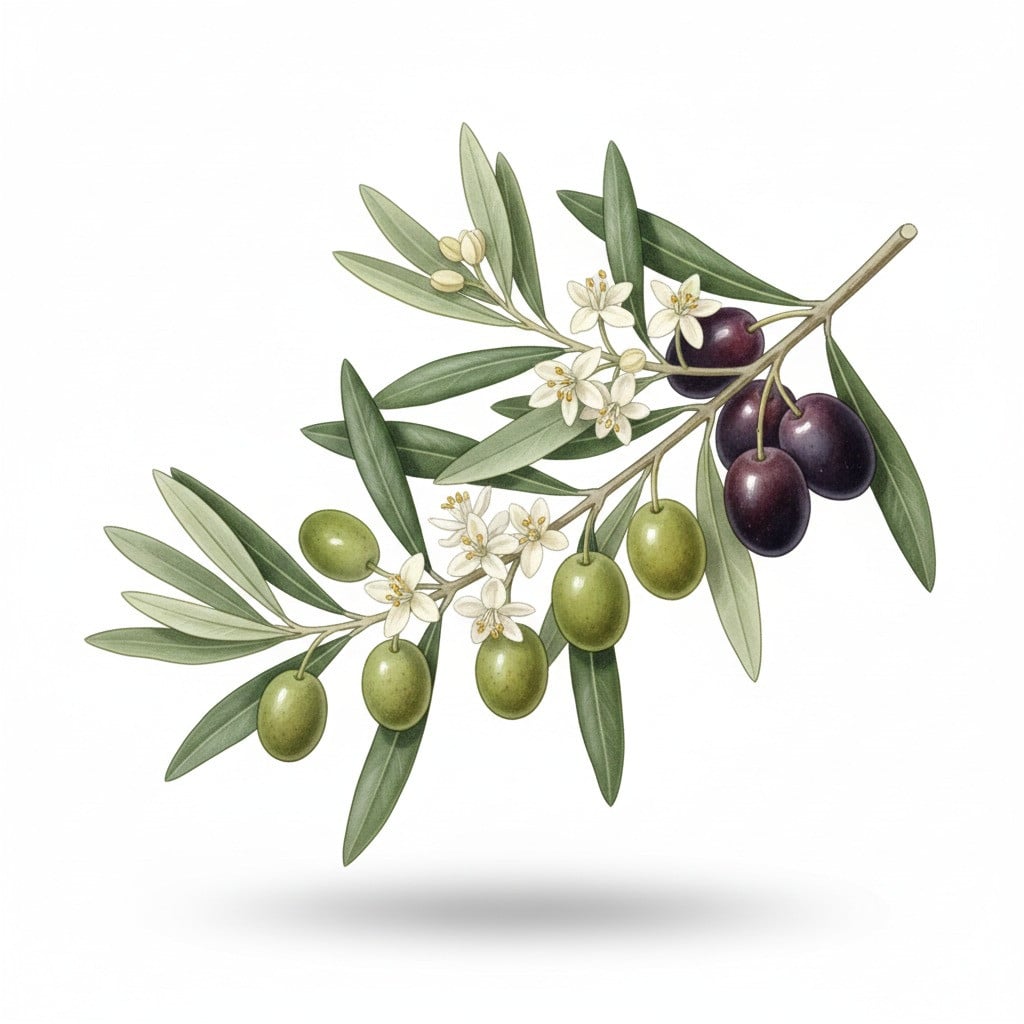
Variety
Standartsorte
created by Watte at 21.05.2026
Season Overview
Propagating
Planting
Harvest
Harvest
J
F
M
A
M
J
J
A
S
O
N
D
1ST YEAR
FOLLOWING YEARS
Description
All the wonder of the olive tree is in the pit of the olive, where the seed is located. You can also plant your own olive tree from this. However, you cannot use olives from the supermarket. This is because they are treated. It is therefore advisable to buy the seeds from a specialist shop or locally during your next vacation. You will find particularly germinable seed in ripe, fresh and undamaged olives. Once you have the seed, you must carefully separate it from the pulp. To speed up germination, it is possible to carefully score the seed. If you have ordered a dried seed, you will need to soak it in warm water for 24 hours before planting it. The olive tree will bear its first olives very late. You can expect the first harvest after around six years. However, your olive tree will not produce the same yield as an olive tree in a grove. This is because these are grafted to produce a higher yield. The older the tree, the greater the yield, which reaches its maximum at around 20 years of age.
Growing tips
Location Olive trees love sunny, warm to hot spots and are therefore suitable for south-facing balconies as well as cold and temperate conservatories. Of course, it is also predestined as a tub plant for the patio in full sun. The silver-grey potted plant looks particularly beautiful in a terracotta pot in combination with roses, oleander, plumbago or mallow. Because it grows slowly and requires little space, the olive is also very suitable for small balconies. In the mild Rhine Valley climate with winter temperatures not below minus five degrees Celsius, olive trees can also be planted out in the garden. Planting and caring for olive trees Olives are among the most undemanding tub plants of all. They are best planted in stable pots in high-quality potting soil. Clay or terracotta pots are well suited as they evaporate excess moisture. The drought-loving plants should only be watered sparingly, as olive trees are very sensitive to waterlogging. To improve water drainage, it is best to add a layer of expanded clay around ten centimetres high to the bottom of the pot when planting. As olive trees prefer a nutrient-poor soil, it is sufficient to give them high-quality pot plant fertilizer once or twice a month. Due to their slow growth, olive trees rarely need repotting, but spring is the best time to do so if necessary. Planting out an olive tree Planting out an olive tree in the garden is only possible in very mild winter regions. Outdoors, the olive tree needs a sheltered, sunny spot with plenty of space around the roots and crown. As olive trees are very sensitive to frost, only older (but not too old!) specimens of hardy varieties grown in local nurseries are suitable for planting out. Be careful when importing older trees from southern Europe! These plants, which are used to a warm climate, usually cannot tolerate the change in temperature. Even when planting outdoors, a drainage layer of gravel or expanded clay should be installed in the planting hole to prevent waterlogging. Cover the entire root ball with soil and support the newly planted olive tree with a support post. Tip: A good compromise is to bury a small olive tree together with the plant pot in the garden over the summer. This way, the tree can be removed from the bed in the fall and safely overwintered. Pruning For us, olives are primarily ornamental plants that should stay in good shape. As the Mediterranean shrubs naturally grow very lightly and have wide leaf spacing, the trees are best grown as standard trees with a dense crown. You should therefore shorten the branches two to three times a year. The long, thin shoots that the container plant formed before the winter break should be shaped into the desired form in February/March. This is how to grow an olive tree trunk with a dense crown: 1st year: clip the main shoot of the olive tree at the desired height and shorten or remove the side branches. 2nd year: Continue to remove the lowest shoots directly on the trunk and regularly top-prune the upper ones to encourage branching. 5th year: After a few years, a dense crown will develop. Always shorten the shoots just above a pair of leaves. Frequent pruning allows olives to grow more densely, and the trees usually also tolerate radical pruning well. However, the harvest cannot be increased by special pruning measures on the olive tree. Winter protection and overwintering As tolerant as olive trees are to extreme heat, they are just as sensitive to frost. The sun worshippers react extremely drastically to sub-zero temperatures, and harsh winters can completely destroy even old trees. For this reason, olive trees are moved to a bright, five to eight degree cooler winter quarters in the fall when night temperatures are around five degrees. This can be a hallway, a well-insulated greenhouse or an unheated conservatory. The winter quarters for olive trees can also be dark if necessary, although the plant will then shed all its leaves, but will sprout again in spring. If temperatures are above ten degrees, flower and fruit formation will suffer in the long term. In winter, olives should be watered just enough to prevent the root ball from drying out, but as evenly as possible. From April/May, the tub plants can be taken outside again. Older, planted specimens require "full-body winter protection". Wrap both the crown and the trunk in several layers of fleece before the first frost and cover the tree slice with brushwood or leaves. Propagation The olive tree is propagated by cuttings. To do this, cut a piece about ten centimetres long at an angle from a young, non-lignified shoot using a sharp knife. When selecting the cutting, make sure that the eyes are already attached. Then remove the lower leaves, press the stem into rooting powder and place the mini olive in a bowl or pot with potting compost. Water the cuttings lightly and place them in a bright, warm place at a temperature of at least 20 degrees. Keep them evenly moist over the next few weeks and the first new leaves will soon sprout. Diseases and pests In spring, the young shoots attract aphids. Brown bumps on the leaves and leaf stalks indicate scale insects. Woolly webs in the leaf axils and on the underside of the leaves indicate mealybugs. If the soil dries out too much, the tree will shed its leaves. Caution: Olives react with a time delay and can still resent care mistakes weeks later.
Details


Light requirement
Sunny

Water requirement
Dry

Soil
Light (sandy)

Nutrient requirement
Low

Plant distance
500 cm

Row spacing
500 cm

Seeding depth
0.5 cm

Companion Plants

Antagonistic Plants
Aubergine / Eggplant
Broccoli
Broccoli raab / Stem cabbage / Cima di rapa
Brussels sprouts
Cabbage (Cabbage)
Cabbage (Pointed cabbage)
Cabbage (red cabbage)
Cabbage (Savoy cabbage)
Cauliflower
Chives
Collard greens
Collard greens (Kale)
Collard greens (Tuscan kale / Dinosaur kale / Palm tree kale)
Courgette / Zucchini
Cucumber / Gherkin
Garlic
Grasses - reeds, cattails, bulrushes
Grasses - Sedges
Kohlrabi / German turnip / Turnip cabbage
Leeks
Napa cabbage / Chinese cabbage
Okra
Onion
Potato
Pumpkin / Squash
Tomato (Bush tomato)
Tomato (Cocktail bush tomato)
Tomato (Cocktail Stake Tomato)
Tomato (Stake tomato)

Diseases
Root Rot
Angular leaf spot of cucumber

Pests
Mealybugs
Schildläuse
Spider mites
Aphids